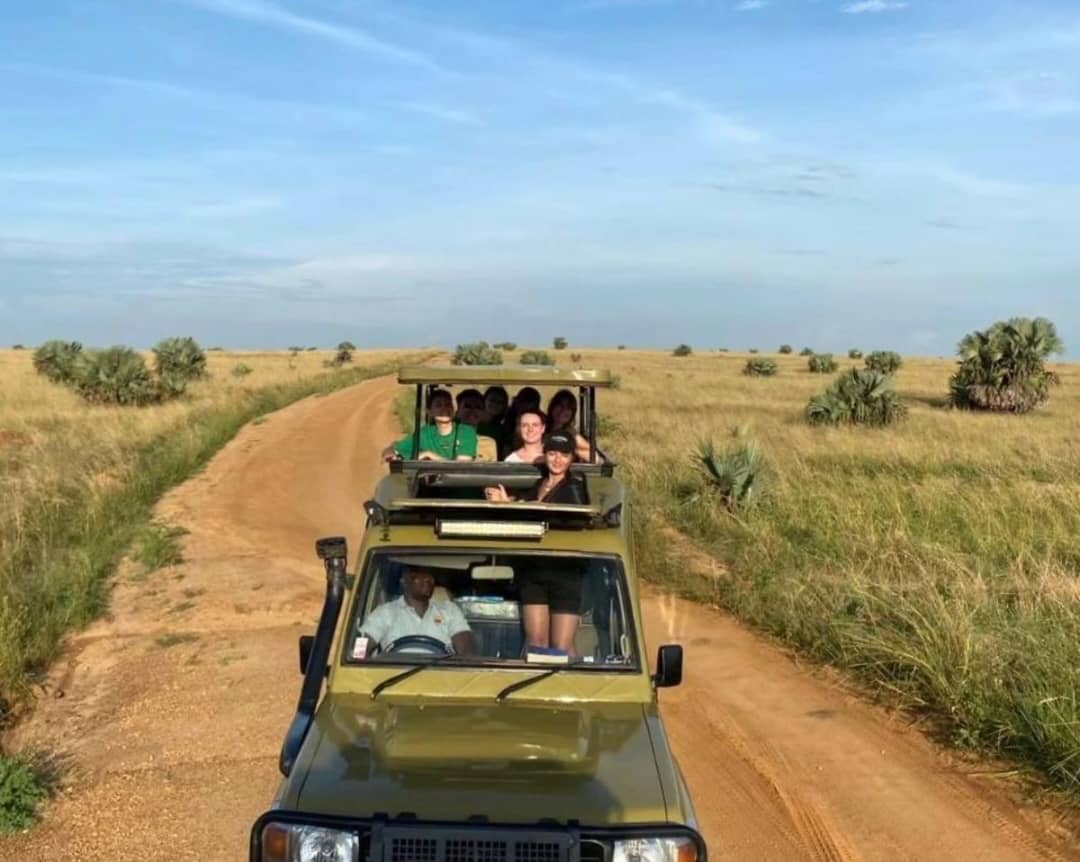
Why Uganda is Africa’s Best Birding Destination in 2026

When the world’s most travelled birders gather to compare life lists and debate destinations, the conversation usually follows a predictable path. Costa Rica for toucans. Ecuador for antpittas. South Africa for endemics. But there is a quiet revolution happening in East Africa, one that is forcing even the most seasoned ornithologists to reconsider the rankings.
That revolution is Uganda.
If you are planning your avian adventures for 2026, let me state this plainly from the outset: Why Uganda is Africa’s Best Birding Destination in 2026 is not merely a marketing headline. It is a statement grounded in biology, geography, and on-the-ground experience. With over 1,090 recorded bird species packed into a country smaller than the United Kingdom, Uganda offers a density and diversity of birdlife that simply cannot be matched elsewhere on the continent .
This is the definitive guide to understanding exactly why Uganda claims that title, and why 2026 is the year to book your flight.
Ⅰ. The Numbers Game: Diversity That Defies Logic
Let us begin with the raw data, because in birding, numbers matter.
Uganda hosts more than 50% of Africa’s total bird species and approximately 10% of all bird species on Earth . To contextualize this: you can stand in Entebbe Botanical Gardens at dawn and tick more species before breakfast than you might manage in a full day elsewhere. The country’s official checklist now stands at 1,088 confirmed species, with new records added regularly .
Consider what this means for your 2026 safari. In a single two-week circuit, experienced birders routinely record 500–600 species without extraordinary effort. Dedicated listers have pushed beyond 700. This is not bravado; it is the mathematical consequence of Uganda’s extraordinary species density .
Why Uganda is Africa’s Best Birding Destination in 2026 becomes immediately obvious when you compare travel efficiency. In southern Africa, you drive vast distances between biomes. In Uganda, you shift ecosystems over morning coffee.
Ⅱ. The Geographic Sweet Spot: Where Africa Converges
Uganda’s avian wealth is not accidental. It is the product of a rare geographical convergence that few countries can claim .
The nation sits at the crossroads of five distinct ecological zones:
| Ecosystem Type | What It Contributes | Prime Location |
|---|---|---|
| East African Savanna | Acacia specialists, raptors, ground birds | Murchison Falls, Kidepo, Queen Elizabeth |
| West African Rainforest | Congo Basin species, forest turacos, hornbills | Semuliki, Kibale, Budongo |
| Albertine Rift Montane | Endemics found nowhere else on Earth | Bwindi, Mgahinga, Rwenzori |
| Afro-Alpine Zones | High-altitude specialists | Rwenzori Mountains, Mount Elgon |
| Great Lakes Wetlands | Shoebill, papyrus endemics, waterfowl | Mabamba, Lake Victoria, Kazinga Channel |
This compression of habitats within drivable distances is the single greatest argument for Why Uganda is Africa’s Best Birding Destination in 2026. You do not chase birds across a continent; you allow the continent to unfold around you in miniature .
Ⅲ. The Albertine Rift: Endemism at Its Finest
For serious birders, endemics are the currency of travel. Common species are pleasant; restricted-range species are treasures.
The Albertine Rift, which forms Uganda’s western spine, is one of the most important biodiversity hotspots on the planet. It supports over 40 endemic bird species, the vast majority of which occur within Uganda’s protected areas .
Bwindi Impenetrable Forest alone hosts 23 of Uganda’s 24 Albertine Rift endemics, making it arguably the most important single birding site in Africa . Here, you can pursue:
-
African Green Broadbill – A small, luminous green jewel restricted to high-altitude bamboo thickets. Extremely rare, intensely sought, and reliably present in Bwindi’s Ruhija sector .
-
Shelley’s Crimsonwing – Vivid red and black, cryptic and vulnerable. A genuine challenge for even the most skilled guides .
-
Regal Sunbird – The name is not hyperbole. Iridescent green head, crimson and yellow breast—a living gem .
-
Rwenzori Turaco – Prehistoric, colourful, and utterly unforgettable .
-
Grauer’s Swamp Warbler – An endangered specialist of high-altitude bogs, found in Bwindi’s Mubwindi Swamp .
When birders ask Why Uganda is Africa’s Best Birding Destination in 2026, the Albertine Rift is the answer. No other African country offers this concentration of range-restricted endemics in such accessible settings .
Ⅳ. The Shoebill: Uganda’s Living Icon
No discussion of Uganda’s birding supremacy is complete without acknowledging the species that has launched a thousand international flight bookings.
The Shoebill Stork (Balaeniceps rex) is not merely a bird. It is a prehistoric apparition, a creature that seems to have wandered out of the Cretaceous and forgotten to evolve. Standing four feet tall with a bill shaped like a Dutch clog, it moves with glacial deliberation and stares with unsettling intensity .
Shoebills occur in several African countries, but Uganda offers the most reliable, ethical, and accessible viewing opportunities on the continent .
Mabamba Swamp, a Ramsar wetland on the shores of Lake Victoria, is the premier destination. Here, local guides navigate narrow papyrus channels by canoe, reading the swamp’s subtle signs to locate these statuesque hunters. Success rates exceed 90% .
Murchison Falls National Park offers a second excellent opportunity, with Shoebills frequently visible from boat cruises in the Nile Delta .
For countless visitors, that single encounter—a Shoebill, motionless among papyrus, eye-locked with a breathless human, cements Why Uganda is Africa’s Best Birding Destination in 2026 beyond any rational argument .
Ⅴ. The 2026 Advantage: Infrastructure, Conservation, and Guiding
Why specifically 2026? What makes this year different from any other?
A. Improved Access and Infrastructure
Uganda’s birding circuit has matured significantly. Roads connecting major birding sites have been upgraded. Domestic travel is increasingly efficient. Key habitats that once required expedition-level commitment are now accessible to traveling birders of all ages and abilities .
B. Conservation Momentum
In early 2026, Uganda Wildlife Authority reintroduced southern white rhinos to Ajai Wildlife Reserve in West Nile, the first time in 45 years these animals have roamed the region . This is not directly about birds, but it signals something crucial: Uganda is investing seriously in its protected areas. Healthy ecosystems support healthy bird populations. Conservation momentum benefits everything with wings.
C. World-Class Guiding
Ask experienced birders what separates exceptional destinations from merely good ones, and the answer is almost always the same: guides.
Uganda’s bird guides are internationally respected for their auditory identification skills, ecological knowledge, and genuine passion . Many can identify hundreds of species by call alone, even in dense rainforest. They know where the pittas skulk, where the broadbills forage, and when the nightjars display.
This expertise is not imported; it is locally grown, community-rooted, and continuously refined. In 2026, Ugandan bird guiding remains among the best in the world .
Ⅵ. The Complete Package: Birds Plus Everything Else
Here is where Uganda truly separates from the competition.
Costa Rica has magnificent birding. So does Peru. So does South Africa. But none of them offer this:
Mountain gorillas in Bwindi. You can spend the morning pursuing African Green Broadbills and the afternoon watching a silverback tend his family. That is not hyperbole; that is a Tuesday .
Chimpanzees in Kibale. Forest birding here is exceptional—Green-breasted Pitta, Black Bee-eater, Chocolate-backed Kingfisher, and so is the primate tracking .
Tree-climbing lions in Queen Elizabeth. On the Ishasha Plains, lions do what lions do everywhere except they do it twenty feet up a fig tree. Meanwhile, the Kazinga Channel offers some of the finest waterbird photography in Africa .
Kidepo’s wilderness. In Uganda’s remote northeast, Ostriches stride the savanna while Egyptian Vultures patrol overhead. You might see 300 birds here. You might also see buffalo herds stretching to the horizon .
This combination, world-class birding seamlessly integrated with world-class wildlife—is unique to Uganda. You do not choose between birds and mammals. You get both, often on the same game drive .
This is central to Why Uganda is Africa’s Best Birding Destination in 2026. It respects that birders are rarely only birders. We are nature lovers. Uganda understands this.
Ⅶ. Year-Round Birding Potential
Uganda’s equatorial location means consistent daylight hours, stable temperatures, and genuine year-round birding potential .
While seasonal patterns exist, Uganda has no true off-season. Consider your preferences:
Dry Seasons (June–August, December–February)
-
Trail access is easier
-
Roads are passable
-
Photography conditions are excellent
-
Forest birding remains productive
Wet Seasons (March–May, September–November)
-
Migratory species from Europe and Asia swell species counts
-
Resident birds display breeding plumage and heightened vocal activity
-
Landscapes are lush and dramatically beautiful
-
Fewer travelers, more intimate experiences
Many experienced birders actually prefer the green seasons for the sheer abundance of bird activity. The choice is yours. Either way, Uganda delivers.
Ⅷ. The Uncrowded Advantage
Here is an uncomfortable truth about global birding tourism: many of the world’s most famous destinations are increasingly crowded.
Costa Rica’s Carara National Park can feel like a city sidewalk. Peru’s Manu Road requires booking months, sometimes years, in advance. South Africa’s Kruger National Park hosts millions of annual visitors.
Uganda remains refreshingly, authentically uncrowded .
You will share Bwindi’s forest trails with gorilla trekkers, certainly. But dedicated birding routes like Ruhija’s Mubwindi Swamp trail or Buhoma’s waterfall loop offer solitude. Mabamba’s papyrus channels accommodate one canoe at a time. Kidepo’s vast savannas often feel like your private concession.
For birders who value quiet observation over queueing, this is genuinely significant. It is another quiet reason Why Uganda is Africa’s Best Birding Destination in 2026.
Ⅸ. Conservation Impact: Your Visit Matters
Birding tourism in Uganda is not extractive; it is regenerative.
Sites like Mabamba Swamp, Bigodi Wetland Sanctuary, and Echuya Forest Reserve demonstrate how birding directly supports conservation and community development . Your entrance fees fund wetland protection. Your guide hire provides rural employment. Your presence creates economic incentive to preserve habitat rather than convert it.
When you choose Uganda, you are not merely pursuing lifers. You are actively contributing to the preservation of one of Africa’s most important avian regions .
Ⅹ. Planning Your 2026 Birding Safari
Recommended Itinerary: The Complete Uganda Birding Circuit (14 Days)
| Days | Location | Target Species | Experience |
|---|---|---|---|
| 1–2 | Entebbe | Shoebill (Mabamba), Great Blue Turaco (Botanical Gardens) | Canoe safari, forest walks |
| 3–4 | Kibale Forest | Green-breasted Pitta, Black Bee-eater, African Grey Parrot | Chimpanzee tracking, forest birding |
| 5–6 | Queen Elizabeth NP | African Skimmer, Martial Eagle, Papyrus Gonolek | Kazinga Channel boat cruise, savanna game drives |
| 7–10 | Bwindi Impenetrable Forest | African Green Broadbill, Shelley’s Crimsonwing, Regal Sunbird | Albertine Rift endemics, optional gorilla trekking |
| 11–12 | Murchison Falls NP | Shoebill (Delta), Pel’s Fishing Owl, Standard-winged Nightjar | Nile boat cruise, night drives |
| 13–14 | Lake Mburo/Ziwa | Acacia specialists, rhinos (Ziwa) | Walking safaris, rhino tracking |
Essential Gear for 2026
-
Binoculars: 8×42 or 10×42. Wide field of view essential for forest birding .
-
Field Guide: Birds of East Africa (Stevenson & Fanshawe) or digital equivalent .
-
Recording Device: Smartphone apps like Birds of East Africa or Merlin are increasingly useful for call playback and identification .
-
Clothing: Neutral colours, waterproof layers, sturdy footwear.
-
Camera: Mirrorless or DSLR with silent shutter; telephoto lens recommended .
Guiding Recommendation
Do not attempt Uganda without a specialist bird guide. Your safari operator can connect you with certified professionals through the Uganda Bird Guides Club. This is not optional; it is the single biggest factor determining your species count and overall experience .
Conclusion: The Verdict for 2026
Why Uganda is Africa’s Best Birding Destination in 2026 is not a matter of opinion. It is a conclusion reached through objective comparison:
Highest species density on the continent
Unmatched Albertine Rift endemism
World’s most reliable Shoebill viewing
Exceptional guiding standards
Seamless integration with premier wildlife experiences
Genuine year-round potential
Meaningful conservation impact
Authentic, uncrowded experience
No other African country assembles this complete package.
Uganda does not shout about its avian supremacy. It does not need to. The birds speak for themselves, in the papyrus channels of Mabamba, the misty heights of Ruhija, the acacia-dotted plains of Kidepo, and the ancient forests of Kibale and Bwindi.
Why Uganda is Africa’s Best Birding Destination in 2026 is a statement of fact.
The only question remaining is whether your 2026 life list will include the Pearl of Africa.
Ready to plan your Ugandan birding safari? Contact our recommended specialist operators or certified bird guides through the Uganda Bird Guides Club. Spaces for peak seasons fill quickly—2026 is expected to be the busiest birding year yet.
Have you birded Uganda? Share your top sighting in the comments below.